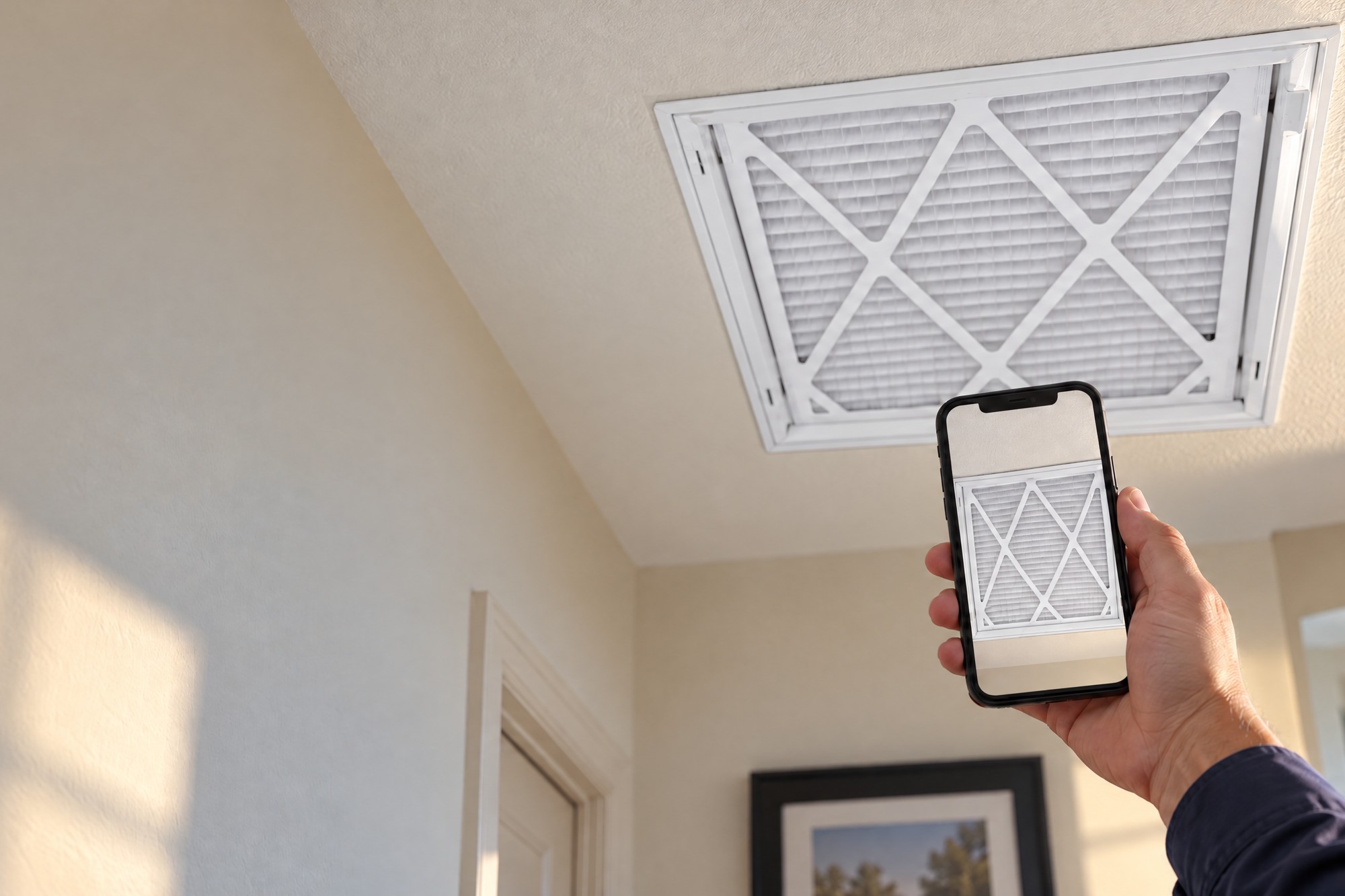
In a San Antonio rental, the AC filter should be checked monthly and changed every 30 to 60 days, because the air conditioning here runs most of the year. A skipped filter costs far more than the $10 to $25 it takes to replace: the U.S. Department of Energy says a clean filter can lower AC energy use by 5% to 15%, and a clogged one lets dirt reach the coil inside the system. Left long enough, a missed filter turns into a $150 to $1,200 repair or a $5,500 to $11,500 system replacement.
The problem in a rental is simple. The tenant is responsible for changing the filter, but the owner pays when the system fails. This guide shows what a skipped filter actually costs, who pays under Texas law, and how to make sure filters get changed instead of just hoping they do.
How Often Should AC Filters Be Changed in a San Antonio Rental?
The U.S. Department of Energy recommends cleaning or replacing AC filters every month or two during the cooling season, and more often when the system runs constantly, the home is dusty, or there are pets.
In San Antonio, the cooling season covers most of the year, so a rental should follow the short end of that range:
- Every 30 days for homes with pets, more than two occupants, or nearby construction
- Every 60 days at most for everyone else
- Check monthly either way, because a filter can clog faster than its label says
The filter's "90-day" label assumes average conditions. A rental in a Texas summer, with the AC running for months straight, is not average.
What a Clogged Filter Does to Your AC System
A filter's job is to catch dust before it reaches the parts of the system that matter. When it clogs, three things happen.
Airflow drops. The Department of Energy notes that clogged filters reduce airflow and significantly reduce a system's efficiency. The blower motor has to work harder to pull air through, and the system runs longer to cool the same house.
Dirt reaches the coil. When airflow is blocked, air can bypass the filter and deposit dirt directly on the evaporator coil, which, in the Department of Energy's words, impairs the coil's ability to absorb heat. A dirty coil cools poorly no matter how new the next filter is.
Parts wear out early. Low airflow can cause the coil to freeze, and a system that runs longer and harder every day puts extra hours on the compressor and blower motor. Those are the expensive parts.
None of this happens overnight, which is exactly why it gets missed. The tenant notices nothing until the house won't cool on a 102-degree afternoon. By then, the damage is done.
The Real Cost: A Filter vs. a Repair vs. a Replacement
| What you pay for | Typical San Antonio cost |
|---|---|
| One standard AC filter | $10 to $25 |
| A year of filters, changed every 30 to 60 days | $60 to $300 |
| HVAC repair visit (frozen coil, blower motor, capacitor, and similar) | $150 to $1,200 |
| Full system replacement | $5,500 to $11,500 |
Repair and replacement ranges are from ConsumerAffairs' 2026 San Antonio HVAC guide.
Put those numbers side by side and the math is lopsided. Even at the high end, a year of filters costs about $300. A low-end system replacement at $5,500 equals more than 18 years of filters at that price, and more than 90 years at the low end. One premature replacement costs more than every filter the home will need for as long as you own it.
And that's before the costs that don't show up on the invoice: an emergency call on a weekend, a tenant without AC in August, and a frustrated tenant who doesn't renew.
Why Tenants Skip Filter Changes, and Why Reminders Don't Fix It
Most tenants aren't careless. The filter just never makes their list:
- It's out of sight. Many San Antonio homes have the return in a hallway ceiling. Nobody looks up.
- They don't know the size. If the tenant has to climb a ladder to read the size before buying one, it waits.
- They don't pay the consequence. When the system fails, the owner pays for the repair. The tenant just waits for a technician.
- Nothing confirms it happened. A text reminder can be read and ignored, and nobody knows.
Across the hundreds of properties I've managed in San Antonio, nearly half of all work orders were HVAC-related. Most traced back to restricted airflow from missed filter changes. Reminders alone don't change that pattern, because a reminder is a request, not a result.
Who Pays When a Dirty Filter Damages the AC in Texas?
Many Texas residential leases make the tenant responsible for replacing AC filters, so check yours. And under Texas Property Code Section 92.052(b), a landlord generally has no duty to repair a condition caused by the tenant, unless it comes from normal wear and tear.
So on paper, a tenant who never changed the filter should pay for the damage. In practice, the owner usually pays anyway, for one reason: proof.
To charge a tenant for an AC repair, you need to show the damage came from their neglect rather than age or wear. That means a technician's written finding that restricted airflow caused the failure, plus a record of when the filter was last changed. Most owners have the first and not the second. Without dated records, "the tenant never changed the filter" becomes your word against theirs, and a disputed charge against a security deposit is hard to win.
The owners who recover these costs are the ones who documented filter condition all along. This is general information, not legal advice. Talk to a Texas real estate attorney about a specific dispute.
How to Make Sure Filters Actually Get Changed
There are four common approaches. Only one produces proof.
| Approach | What it does | The gap |
|---|---|---|
| Lease clause and reminders | Puts the duty on the tenant in writing | No way to know it happened |
| Filter delivery | Ships the right size to the tenant's door | A filter in a closet protects nothing |
| Periodic inspections | Someone checks the filter in person | Every 3 to 6 months, a filter can clog several times between visits |
| Monthly photo verification | Tenant submits a dated photo of the new filter installed | Requires a system and follow-up when a photo doesn't come in |
If you self-manage, you can build a simple version of the last one: deliver filters on a schedule, require a dated photo of each installation, and follow up within days when one is missed. Keep every photo. Those records are what protect you if you ever need to show a tenant caused damage.
If you use a property manager, ask exactly how they confirm filters are changed. "We remind tenants" is not an answer.
How For Lease Clover Verifies Every Filter
We built FilterSync because reminders weren't enough. On every home we manage that's enrolled, it works like this:
- Filters are delivered to the tenant, in the right size, on schedule.
- Tenants get scheduled text reminders with a secure link to submit a photo of the installed filter.
- Every 30 days, installation is verified with a time-stamped photo, and missed submissions get followed up.
- The record builds automatically, so if an HVAC problem ever comes up, there's a dated history of filter changes instead of a guess.
We back it in writing. Under our HVAC Preservation Guarantee, if an HVAC failure on a FilterSync home is even partially caused by a clogged filter, we pay for the repair plus $500 for excess system wear.
See how it fits with the rest of our maintenance services and guarantees, or get a free rental asset analysis for your home.
Frequently Asked Questions
How often should AC filters be changed in a San Antonio rental?
Check the filter monthly and change it every 30 to 60 days. The U.S. Department of Energy recommends replacing filters every month or two during cooling season, and in San Antonio the cooling season covers most of the year. Homes with pets or more occupants should change filters every 30 days.
Who is responsible for changing AC filters in a Texas rental?
Most often the tenant, if the lease says so. Many Texas residential leases assign filter replacement to the tenant. Check your lease, and make sure the clause is specific about how often filters must be changed.
Can a landlord charge a tenant for AC damage caused by a dirty filter in Texas?
Possibly. Under Texas Property Code Section 92.052(b), a landlord generally has no duty to repair conditions caused by the tenant, apart from normal wear and tear. But the landlord needs proof that the tenant's neglect caused the damage, such as a technician's written finding and dated records of filter changes. This is general information, not legal advice.
Does a dirty AC filter raise the electric bill?
Yes. According to the U.S. Department of Energy, replacing a dirty, clogged filter with a clean one can lower an air conditioner's energy consumption by 5% to 15%.
What happens if an AC filter is never changed?
Airflow drops, the system runs longer and harder, and dirt can bypass the filter and coat the evaporator coil. Over time that can lead to a frozen coil, a failed blower motor or compressor, and in San Antonio a repair bill of $150 to $1,200 or a system replacement of $5,500 to $11,500.
More answers for owners are in our Owner FAQ.
About the Author
Michael Marelli is the broker and owner of For Lease Clover (TREC License #9012932), a San Antonio property management company. A San Antonio native, he has been a licensed real estate professional since 2013 and a Texas broker since 2020 (TREC License #639078). Before property management, he worked as a P&C underwriter evaluating property damage. He invests in rental property himself and built FilterSync, For Lease Clover's monthly HVAC filter verification system.